Chris Mason: Home secretary to face scrutiny over changes to rules for legal migrants
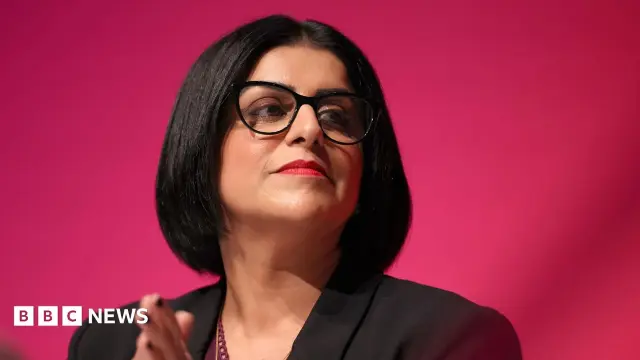
Central to discussions about legal migration is the question of what constitutes fairness. Home Secretary Shabana Mahmood, whose own parents emigrated from rural Kashmir to the UK, now finds herself tasked with reforming the immigration system that once welcomed her family. Her challenge involves crafting policies perceived as just by both her party and the wider nation. Mahmood articulated this in a speech at the Labour Party conference last September, emphasizing fairness not only to new migrants seeking better lives, like her parents, but also to current residents, including British workers and especially the younger generation.
This dialogue emerges amid a backdrop of significant legal immigration in recent years and the rise of Reform UK as a notable player in national politics. These factors have influenced Labour’s desire to address public concerns over the volume of arrivals. However, critics from opposing parties interpret Labour’s shifts on migration policy as signs of weakness and retreat. Recent reports suggest modifications to Mahmood’s original plans, indicating a revision of her approach. Tracing the development of this policy over the past year provides insight into how current announcements have taken shape.
In November of the previous year, Mahmood introduced a proposal dubbed “a fairer pathway to settlement.” This initiative sought public input through a consultation exercise that attracted approximately 200,000 responses, including 140,000 from visa holders themselves. According to an insider from Whitehall, the process was “a colossal exercise and a genuine one,” underscoring the government’s commitment to developing the policy carefully. Still, questions arise as to whether political pressures and leadership changes prompted adjustments behind the scenes. Mahmood has cited a surge of 2.6 million migrants between 2021 and 2024—about one in every 30 residents—as the impetus for reform, a trend critics attribute to policies enacted under former Prime Minister Boris Johnson and dubbed the “Boriswave.” With many of these new arrivals nearing eligibility for indefinite leave to remain (ILR), Mahmood stressed the urgency of tightening settlement rules, especially for lower-wage migrants who bring dependants and children, citing significant fiscal concerns. She proposed extending the qualifying period for settled status to 15 years for this group, a change intended to address these worries.
Despite these justifications, the proposals sparked opposition both within Labour and among other voices, many of whom raised fairness as their central objection. For instance, Angela Rayner, now Housing Secretary, criticized the ideas as “un-British,” arguing that changing the rules after migrants arrived in good faith constituted “moving the goalposts.” Mahmood, however, remained resolute in March, emphasizing the unprecedented scale and nature of recent migration and attributing an estimated £10 billion taxpayer cost to this influx based on Migration Advisory Committee data. She described this as “an affront to the idea of fairness within our migration system.” While this financial estimate is contested, with think tanks like the IPPR highlighting broader long-term costs not directly addressed by the policy, Mahmood’s tough stance found some quiet support among senior Conservatives.
Nevertheless, dissatisfaction echoed loudly within Labour, with roughly 100 members voicing public dissent. By May, discussions with figures such as Andy Burnham indicated that modifications to the policy were likely, though Burnham acknowledged the need to balance concerns while recognizing the overall direction as “right.” Mahmood’s softened rhetoric—the “broad thrust” of her plans—reflects this evolving stance. Opponents, particularly the Conservatives, have labeled these shifts an “excruciating U-turn” that could embarrass the home secretary personally. Questions remain about how the government intends to implement these revisions, with fears that lack of primary legislation could leave the changes vulnerable to legal challenges. Mahmood, however, is expected to argue that her aim has been to frame a migration policy acceptable to the widest possible audience. The coming days will reveal the full spectrum of responses her announcements generate
On air now
Juicebox