UK and EU agree draft deal to scrap Brexit red tape over food exports
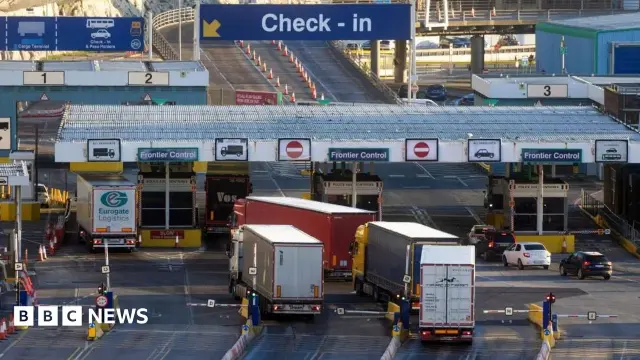
The UK and the European Union have reached a draft agreement aimed at eliminating post-Brexit checks on food and agricultural exports. This development comes ahead of the upcoming UK-EU summit scheduled later this month. According to reports, a comprehensive 200-page draft detailing the so-called “SPS” (sanitary and phytosanitary) agreement has been shared with EU member states in Brussels for review at a meeting planned for Wednesday. Alongside this, draft texts concerning emissions trading and a youth travel and work program, as well as a 15-page joint statement for UK and EU leaders, have also been distributed.
Central to this agreement is the removal of various certificates and fees that have burdened exporters since the UK left the EU’s single market. The deal is expected to eliminate the requirement for £200 Export Health Certificates, £25 Phytosanitary certificates, inspector and sampling fees, organic certifications, some port fees, and other related import and export checks. The UK government predicts that these changes will ultimately benefit the British economy by an estimated £5.1 billion annually. Additionally, exports such as fresh sausages, burgers, shellfish harvested from UK waters, and seed potatoes will be permitted to resume, while UK pets will be able to travel to the EU with passports.
The agreement commits the UK to a process known as “dynamic alignment,” whereby it will continue to observe and adapt to existing EU standards related to plant, animal, and food trade. Although much of UK regulation currently aligns with that of the EU, some divergences exist—for example, in the area of “precision breeding” of plants, formerly labeled gene editing. Recent discussions have led to transitional measures while the EU implements its new rules. Furthermore, the UK government has introduced the European Partnerships Bill, designed to legally facilitate the adoption of new EU regulations, enable alignment for integrating the UK emissions trading scheme with the EU’s counterpart, and avoid the need for UK exporters to pay the EU’s new carbon border tax.
The draft proposals will be examined at a meeting of EU ambassadors, known as Coreper, on Wednesday. Key elements of the proposed Youth Experience Scheme will also be settled politically in the near future. Negotiations are ongoing around issues such as discounted foreign student fees for EU citizens—which may be deferred until next year—and plans to reconnect electricity markets. Reports also suggest the draft agreements include references to UK participation in defense cooperation programs, access to law enforcement databases, and assurances related to the EU’s “Made in Europe” initiatives.
While the food trade agreement has garnered support from supermarket chains and representatives of agricultural sectors, some pro-Brexit advocates have criticized the renewed application of EU regulations. Notably, the Brexit trade deal secured by Boris Johnson’s government prioritized regulatory sovereignty over minimizing export and import delays or red tape. Meanwhile, the British Chamber of Commerce (BCC) has released a new analysis reflecting the views of its members, expressing growing frustration with the current trade setup. The BCC highlights that businesses continue to face “a thicket of Brexit red tape” nearly six years after the UK’s departure from the EU.
The business lobby warns that the present trade relationship “is failing to deliver” and urges the government to explore more fundamental changes to the UK-EU economic partnership. According to the BCC, the most significant long-term economic benefits would arise from rejoining the single market or even the EU itself. It has called on the government to analyze and publicly share options while consulting with businesses. The BCC has proposed nine potential models for a future relationship, including a customs union, a “Swiss-style” single market association, and a “Canada model” type of partnership.
Shevaun Havilland, director general of the BCC, praised the prime minister for initiating discussions about the future UK-EU relationship, stating, “The evidence from businesses suggests that the prime minister is right to have initiated a conversation on our future relationship with Europe, and he deserves real credit for having done so.” She added, “Government needs to examine all of the options, remain clear-headed about the trade-offs each involves, and involve business in the decision-making process from the start.” A recent survey by the BCC found that over half (56%) of exporting businesses want the removal of EU customs paperwork and delays to facilitate growth, rising to 58% among manufacturers. The prime minister has signaled his intention to use the forthcoming summit to start a broader conversation about the UK’s long-term relationship with the EU, including the possibility of “going all the way,” which implies rejoining the bloc
On air now
Juicebox