How property, football and politics link Manchester and Abu Dhabi
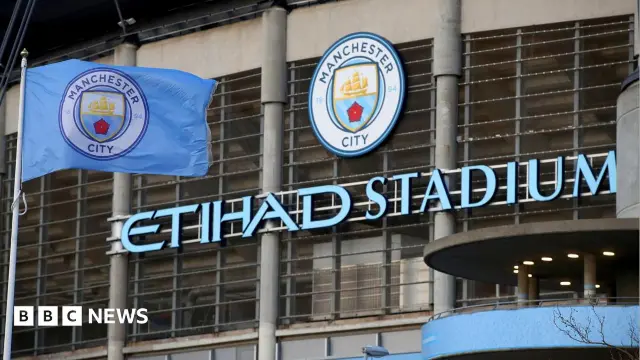
In September, Manchester City faced a significant setback when it was found guilty of violating Premier League financial regulations. An independent commission revealed that the club had “systematically” breached rules over a period spanning from 2009 to 2018. The investigation concluded that the club had artificially inflated sponsorship revenues in order to conceal over £830 million in undisclosed funding funneled into its football operations. Although speculation continues regarding the severity of the consequences the club might face, Manchester City has denied any wrongdoing and is currently appealing the verdict.
Amidst this controversy, attention has turned to the enduring relationship between the club’s Abu Dhabi-based owners and Manchester’s local political figures, including the city’s current leadership. This connection has attracted scrutiny not only due to the football-related issues but also because of extensive land transactions, large-scale regeneration projects, and investigations into loans issued to property firms owned by the Abu Dhabi United Group (ADUG), the ultimate owner of the club. This broader story traces back to 2008, when ADUG, led by Sheikh Mansour bin Zayed Al Nahyan—the UAE’s deputy prime minister and member of its ruling family—acquired Manchester City for £200 million. This purchase instantly elevated City to one of the wealthiest clubs on the footballing stage.
Following the takeover, the club’s Abu Dhabi owners committed huge financial resources to transforming Manchester City into a powerhouse within European football. However, their interests extended beyond the sport itself, encompassing wider ambitions for the city of Manchester. In 2014, six years after the acquisition, ADUG forged a partnership with the Labour-led Manchester City Council. This collaboration, which built upon an existing relationship through a 250-year lease agreement on the former City of Manchester Stadium (originally built for the 2002 Commonwealth Games), resulted in the creation of Manchester Life. The joint venture aimed to deliver over 6,000 new homes in East Manchester with a planned investment of up to £1 billion. To date, approximately 1,500 homes spread across nine sites have been constructed, with additional developments ongoing.
In addition to housing, ADUG has contributed financially to local community facilities, including the East Manchester Leisure Centre, which opened in 2014. Significant redevelopment around the stadium gave rise to the Etihad Campus, now housing Manchester City’s women’s and youth teams. More recently, Co-op Live—the UK’s largest indoor arena—opened adjacent to the Etihad Stadium, representing another major investment in the area in which ADUG holds a substantial stake. Bev Craig, the current Mayor of Greater Manchester, praised ADUG for its “unique passion” and commitment to the city. Speaking to the BBC in 2024, while serving as leader of Manchester City Council, she described the club’s owners as the “catalyst” behind the “remarkable” regeneration of East Manchester. Despite these achievements, some critics have raised concerns that the council sold public land to ADUG at undervalued prices, and a 2022 University of Sheffield report questioned the transparency and public benefit of these projects. In response, Manchester’s political leaders, including former council leader Sir Richard Leese, have strongly denied these allegations
On air now
Juicebox